Choice Fatigue Meets AI: What the Phia Case Study Reveals About Fashion’s Next E-Commerce Era
AI Personalization in Fashion E-Commerce — The Phia Case Study Meta
Keywords: AI, fashion tech, personalization, e-commerce
Word count: ~650 words
Read time: 3 minutes
The Verdict: Shoppers Are Tired?
The State of Fashion 2025 by McKinsey & Company and BoF Insights nailed the 2025 consumer down to one word: fatigued. Dupe culture has made “the real thing” harder to pin down. Climate impact is changing what feels okay to buy. Global trade shifts keep messing with prices. Add it all up and you get a shopper who isn’t browsing for fun anymore — they’re hunting for value, and honestly, they’re exhausted by how hard that hunt has gotten.
So heading into 2026, with AI, LLMs, and agents scaling fast across retail — is AI-powered personalization actually the way out? Instead of endless scrolling through a wall of undifferentiated products, AI gets deployed to curate and streamline search, turning an overwhelmed browser into a confident buyer. On paper, that’s a clean fix: less noise, more relevance, faster decisions in fashion e-commerce. But theory needs a real-world test. One of 2025’s most visible attempts at this exact model is Phia.
What Is Phia?
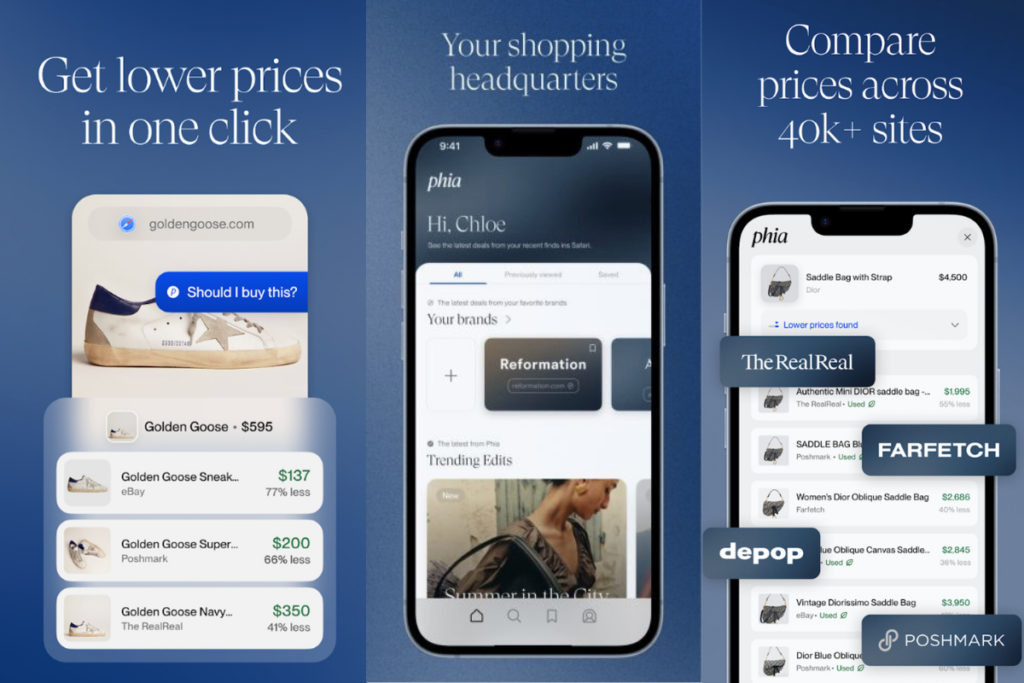
Phia is a free browser extension for AI-powered shopping — living in your Chrome or Safari toolbar, plus a companion phone app — founded in 2025 by Phoebe Gates and Sophia Kianni. What it does is simple and genuinely handy: while you shop, Phia price-checks the item you’re looking at and surfaces cheaper new or secondhand versions from across the web, so you’re not stuck overpaying.
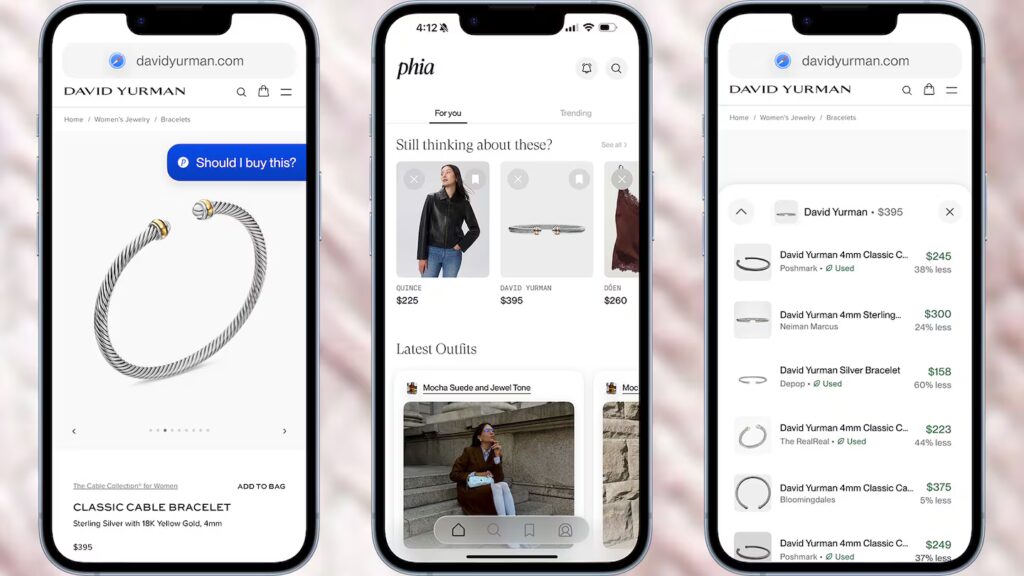
The founders’ own pitch says it best: “Google Flights, but for fashion.” It’s a good comparison — Phia does for clothing what flight-comparison tools did for airfare, aggregating and comparing so you don’t have to open ten tabs yourself. This kind of AI-driven personalization is quietly becoming the new front door to fashion e-commerce, and the product backed up its promise by landing on TIME’s Best Inventions of 2025 list.
Since launching, Phia has moved fast: an $8M seed round in September 2025 led by Kleiner Perkins, followed by a $35M Series A in January 2026 at a $185M valuation led by Notable Capital. By May 2026, the company had raised roughly $43.5M in total, reaching 1.5 million users and close to 10,000 retail partners — a genuinely fast climb for a fashion tech startup built around one clear idea: helping people find the right item at the right price, without the scroll fatigue.
The Bigger Question?
Phia’s investor list reads like a who’s-who of star-studded backing — big venture names attached to a founder with an unusually high public profile. That kind of capital and network access buys speed: fast fundraising, fast retail partnerships, fast media coverage, fast credibility that most fashion tech startups spend years grinding to earn.
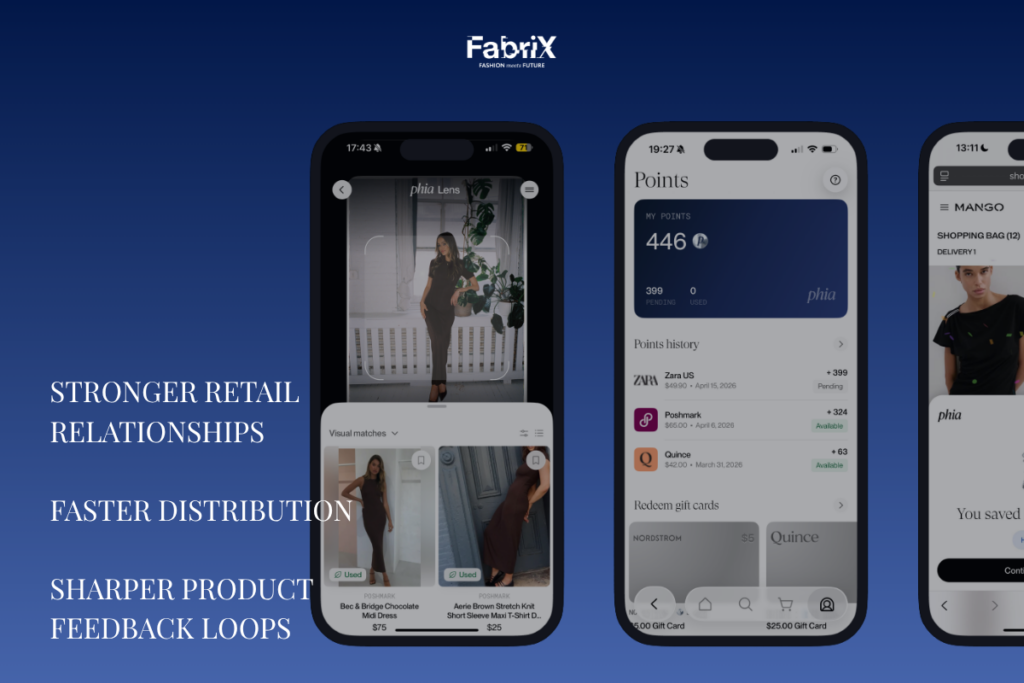
That raises a genuinely interesting question for AI-driven personalization tools going forward: does star-studded funding translate into a real strategic edge — stronger retail relationships, faster distribution, sharper product feedback loops — or is it mostly about visibility, with the actual product still needing to prove itself over time? Phia’s growth numbers suggest the product is resonating on its own merits. But the network clearly hasn’t hurt.
Where FabriX Comes In
This is exactly the kind of development FabriX exists to dig into. Our job isn’t just building AR try-on and 3D tools for designers — it’s staying plugged into every AI shift happening in fashion e-commerce and asking a simple question: could this actually move the needle for our network?
AI-powered personalization plugins like Phia point to something bigger than one startup’s growth story. They’re a signal that the friction between “I want to buy this” and “I found the right version at the right price” is finally solvable at scale. For emerging designers especially, that matters — a smarter, AI-curated discovery layer means less time lost to browser fatigue and more chance a shopper actually lands on their work instead of scrolling past it. FabriX studies fashion tech tools like this precisely so we can figure out what’s genuinely useful infrastructure versus what’s just hype, and bring the useful stuff back to the designers and brands we work with.

Read more:
• The State of Fashion 2025 — BoF & McKinsey Report
• Phia — TIME’s Best Inventions of 2025
Stay connected with FabriX on social media for exclusive updates and content.