The EU Just Made Overproduction Expensive: Fashion’s Answer Is Experience, Not Extra Stock.
Keywords: EU fashion sustainability, unsold inventory, virtual try-on, pre-order fashion, Digital Product Passport, circular fashion, fashion tech
Word Count: ~1,150 words
Read Time: ~5 minutes
Sustainability in fashion used to be a brand story. In the EU, it is becoming a compliance problem.
On 9 February 2026, the European Commission adopted new measures under the Ecodesign for Sustainable Products Regulation (ESPR) to stop the destruction of unsold apparel, clothing accessories, and footwear.
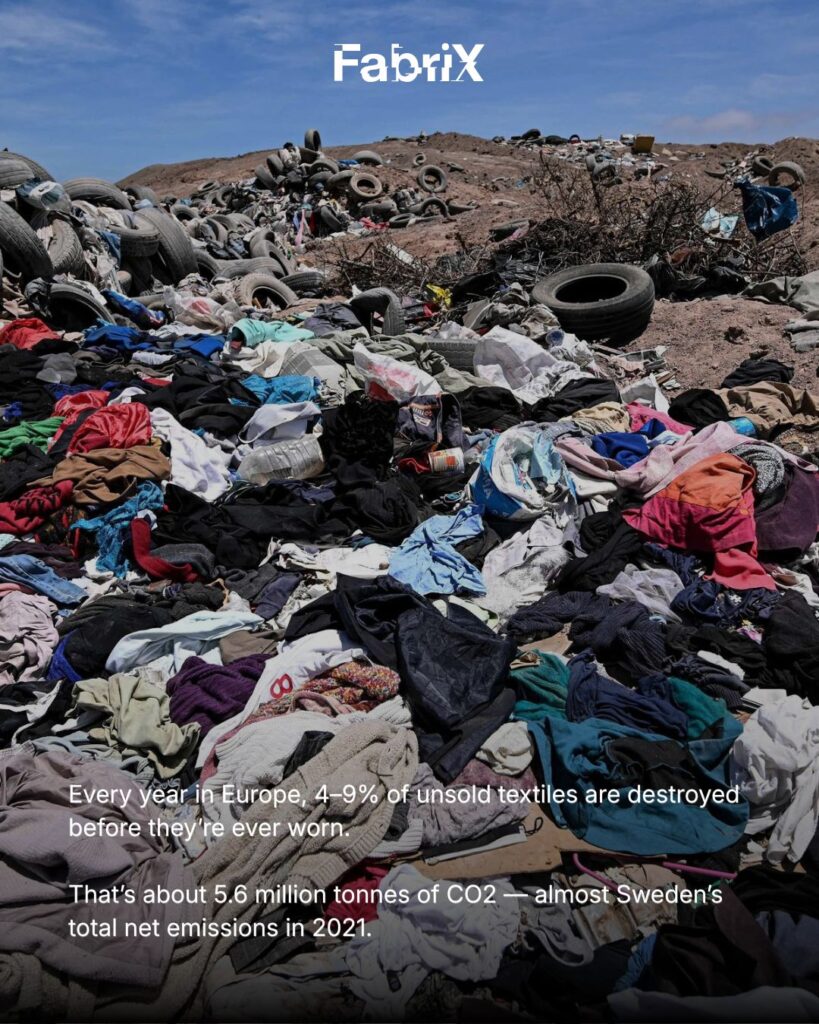
Large companies must comply with the destruction ban from 19 July 2026. Medium-sized companies will follow in 2030. Disclosure of discarded unsold goods already applies to large firms, with a standardised reporting format from February 2027.
This is not a CSR campaign. It is a rewrite of how fashion is allowed to handle leftover stock.
Why This Rule Matters More Than Another Materials Pledge
The destruction ban sits inside a wider EU textile stack:
ESPR — products on the EU market must become more durable, reusable, and recyclable. Textiles are a first target group.
Digital Product Passport (DPP) — a QR-accessible product record covering materials, origin, care, and end-of-life. The textile delegated act is planned for Q4 2027.
Textile Extended Producer Responsibility (EPR) — by June 2027, Member States must run national schemes. Brands selling into the EU, including e-commerce, will register, report volumes, and pay fees.
CSRD / CSDDD — reporting and due diligence keep expanding, even as timelines get simplified. Investors and boards now treat this as risk, not marketing.
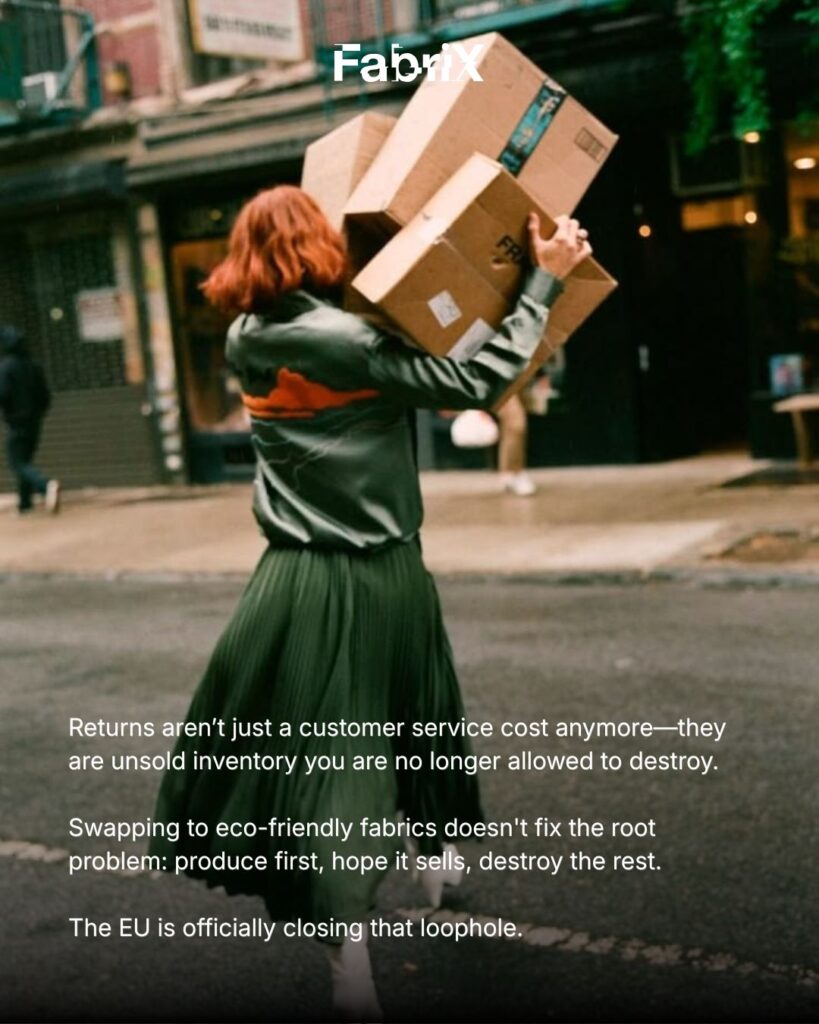
The Commission’s own rationale is operational, not poetic. Instead of discarding stock, companies should manage inventory better, handle returns, and use resale, remanufacturing, donation, or reuse. France already destroys around €630 million of unsold products a year. In Germany, nearly 20 million returned items are discarded annually.
That last figure is the one fashion e-commerce should sit with. Under the new rules, they become unsold product you may no longer be allowed to disappear.
How Serious Brands Are Responding
GANNI: honesty first, then systems
GANNI has spent years refusing the word “sustainable brand.” Their public line is that absolute sustainability is not possible in fashion — fashion is newness — so the job is to get more responsible, measurably, every year.
The 2025 Responsibility Report closes Gameplan 2.0 and opens Gameplan 3.0 (2026–2028) around Women, Climate, and Innovation. The introduction is explicit about why: to future-proof the business against evolving EU legislation, even where the path is not fully defined.
2025 results they published: 32% reduction in absolute carbon emissions, 85% preferred materials, Living Wage work with eight suppliers, SBTi-verified targets, a Vestiaire Collective partnership, membership of The Fashion Pact, and B Corp recertification at 105.3 — up 16% from 90.6 in 2022.
On innovation, GANNI is already building toward the Digital Product Passport — smarter ways to track, care for, and extend product life — plus circular models (resale, repair) and next-gen materials. Founder Nicolaj Reffstrup’s older interview still explains the posture: map the baseline, publish the ugly parts, hold 44 responsibility goals, and do not pretend organic cotton on one category is the job done.
That is the adult version of sustainability: traceability + inventory + legislation, not a capsule collection.
B Corp: investors now have homework
B Corp is not an EU law. It is a privately verified standard for social, environmental, and governance impact — independently audited, and increasingly used to signal that claims can survive scrutiny.
When a company certifies, it tells customers, employees, and investors that the business is accountable beyond shareholder return. B Lab is also explicit that certification helps brands substantiate claims, reduce greenwashing risk, and align with sustainability regulation.
That is why GANNI’s recertification matters in this article. Under ESPR and upcoming DPP/EPR rules, “we care” is not enough. Boards and investors will want proof: volumes placed on the market, unsold goods disclosed, destruction avoided, product data ready for a passport. Certification does not replace EU law. It trains a company to live with obligation.
Paul & Shark: technology as inventory discipline
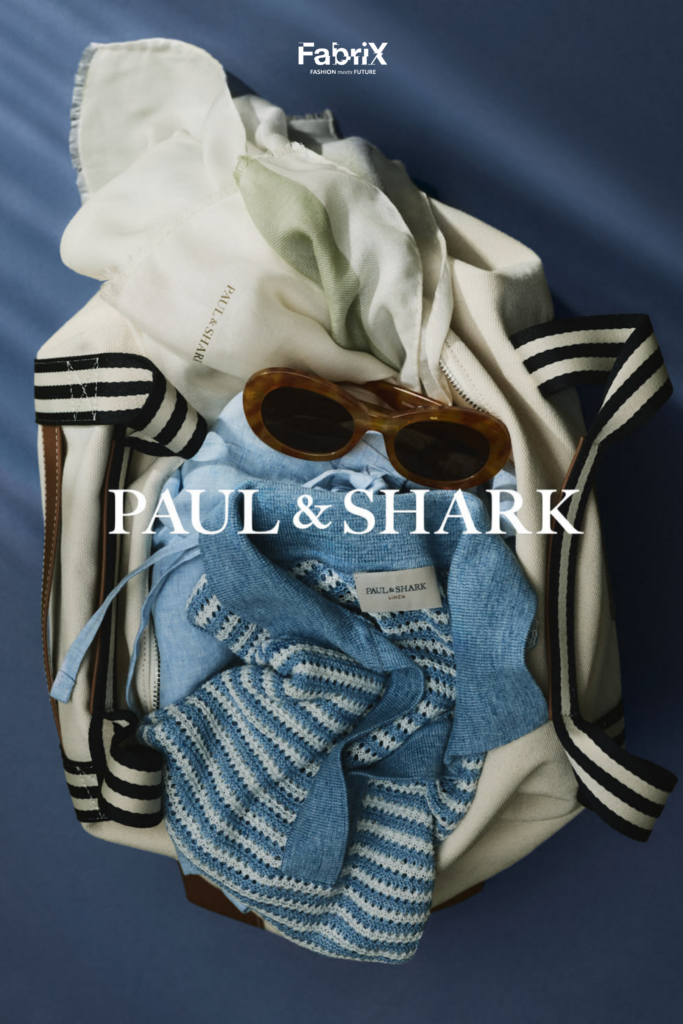
Paul & Shark’s lesson is less about activism and more about how stock actually moves. CEO Andrea Dini runs a network of 2,000+ retailers. Their B2B app exists for a specific reason: menswear partners buy four times a year, then need to reorder what is selling without flying to Milan for a handful of units.
That is inventory control as relationship tech. Dini still insists the first encounter with a collection should be physical — fabrics, technicals, DNA — because online cannot replace that. But once the product is known, digital tools keep fulfillment tight.
Read that next to the EU ban and the point is obvious: the brands that survive regulation will be the ones that know what to make, when, and for whom — not the ones sitting in rooms of unsold products they can no longer quietly destroy.
The Missing Layer: Experience Before Production
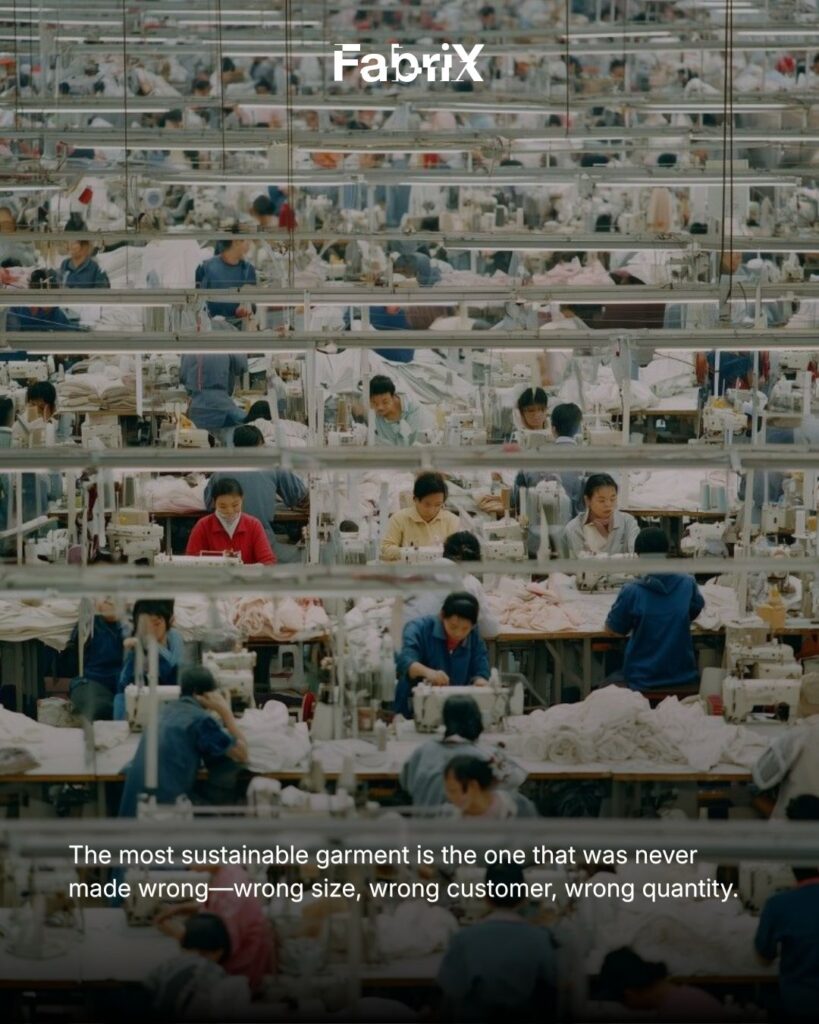
Materials, passports, and B Corp scores matter. They do not solve the first mistake: making too much of the wrong thing.
Fit uncertainty still drives fashion e-commerce returns above 50% in some categories. Every wrong-size return is a candidate for unsold stock. Every speculative wholesale buy is a candidate for leftover inventory. The EU has just made both of those more expensive.
This is why FabriX’s work is migrating harder into virtual / AI try-on and early order / pre-order:
Virtual and AI try-on attack the confidence gap.
If a customer can see drape, proportion, and fit on a body — not a flat lookbook — they buy fewer mistakes. Fewer returns means fewer garments re-entering the “unsold” pile the new rules now police.
Pre-order and early order attack overproduction at the source.
Demand is collected before the factory run. Emerging designers especially cannot absorb a 4–9% destruction rate, or the cash tied up in dead stock. A pre-order model backed by try-on is not a gimmick. It is inventory control with a fitting room attached.

That is also how FabriX reads GANNI and Paul & Shark together. GANNI is building honesty, circular systems, and DPP-ready digital product data. Paul & Shark is using tech so partners reorder what actually sells. FabriX sits in the gap between those two: let people experience the garment before the brand commits the units.
For emerging designers selling into, or inspired by, EU-level standards, this is not optional branding. It is how you stay solvent when leftover product stops being someone else’s problem.
What to Watch Next
What lies ahead for the fashion industry are below:
• July 2026 — large-company destruction ban goes live.
• 2027 — standardised unsold-goods disclosure, textile EPR schemes, and the textile DPP delegated act.
• 2030 — medium-sized companies enter the same destruction and disclosure regime.
Brands that treat this as a legal footnote will scramble. Brands that treat it as a design-and-commerce problem — make less, fit better, sell what was already wanted — will look like they saw it coming.
FabriX is building for the second group: curated emerging design, experienced digitally, ordered with more intent, produced with fewer leftovers.
Read more:
• New EU rules to stop destruction of unsold clothes and shoes — European Commission
• GANNI 2025 Responsibility Report
• Why GANNI is brutally honest with its sustainability program — Scandinavian MIND
• About B Corp Certification
• How Paul & Shark use technology to improve retail relations — Impulso
Stay connected with FabriX on social media for exclusive updates and content.