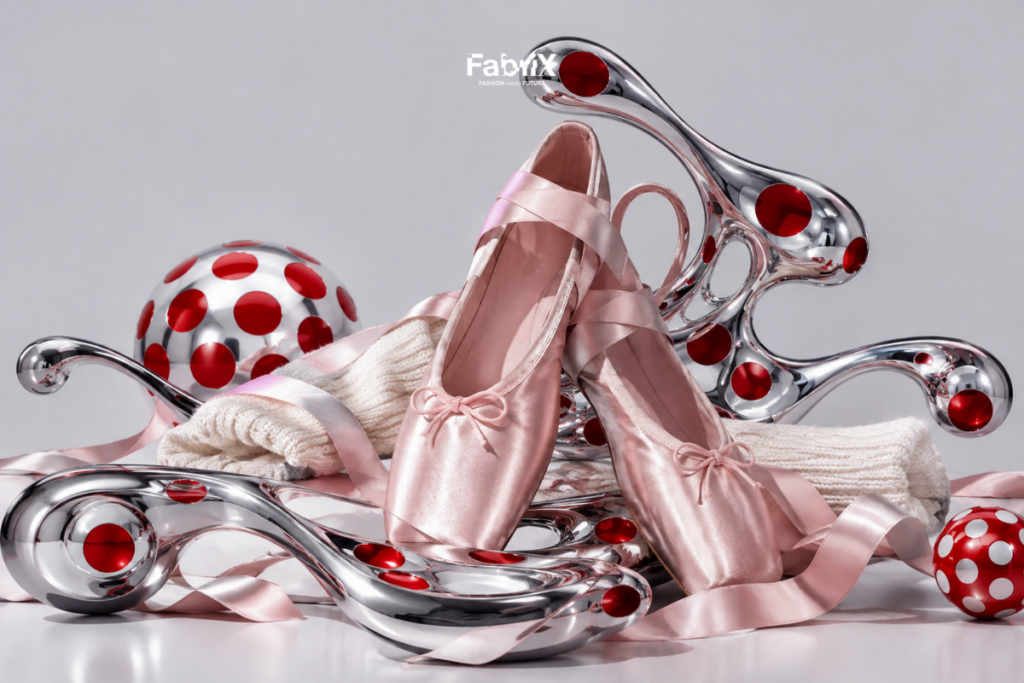
Y3K Fashion Is Not Nostalgia — It’s Fashion Tech Going On-Body
Keywords: Y3K fashion, fashion tech, futuristic fashion, cyber aesthetic, emerging designers
Word Count: ~1,150 words
Read Time: ~5 minutes
Y2K was about looking back. Y3K is about dressing like the future already arrived.
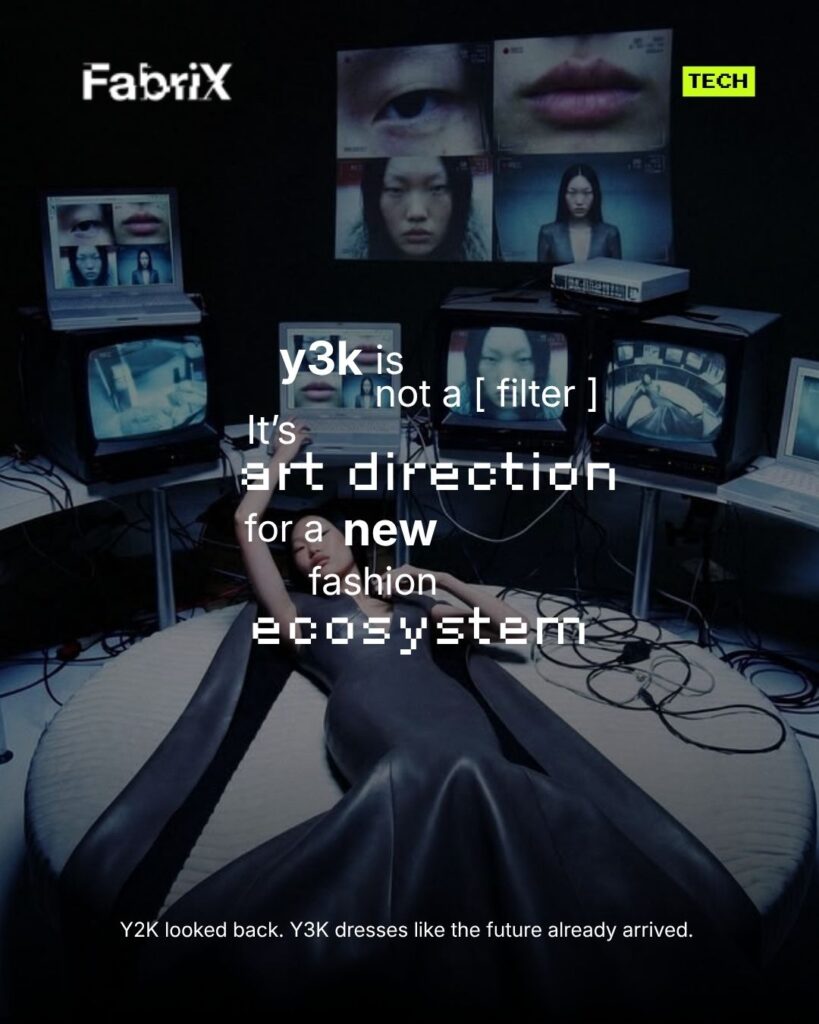
That is the simplest way to understand the aesthetic currently moving from K-pop stages and Xiaohongshu feeds into sportswear collaborations, luxury storytelling, and fashion-tech retail. As Jing Daily put it: Y3K and other cyber aesthetics are forcing brands to rethink fashion, retail, and storytelling — not just the next drop.
Y3K is what happens when fashion tech stops living on a screen and starts living on a silhouette. Fashion and technology ideas blend into one wearable world. That is FabriX’s aesthetic and narrative in general.
What Is Y3K Fashion?
Y3K stands for Year 3000.
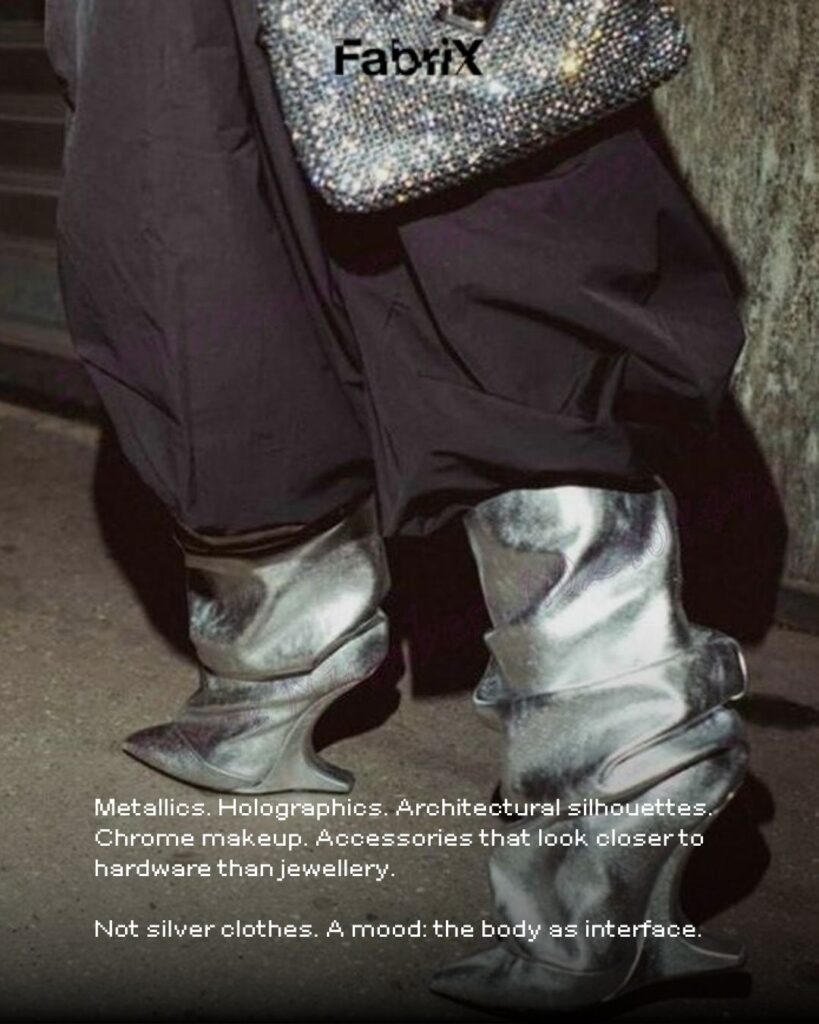
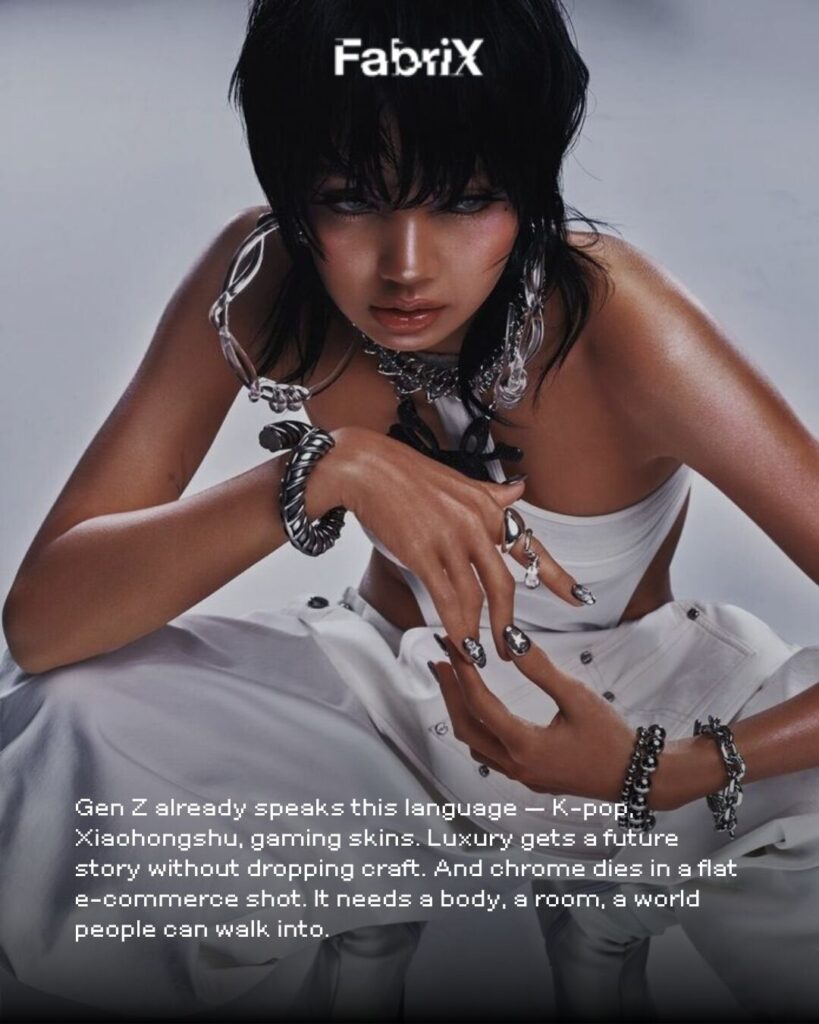
Unlike Y2K — which recycled early-2000s nostalgia, rhinestones, velour, and low-rise denim — Y3K is a forward-facing cyber aesthetic. Think metallic and holographic fabrics, chrome and ice-blue palettes, neon and digital prints, architectural silhouettes, and accessories that look closer to hardware than jewelry.
LitLookz Studio’s style guide frames it as futuristic dressing you can actually wear: metallics, cyber accessories, tech fabrics, and 2026 outfit formulas that feel more “system online” than “throwback Friday.” Perfect Corp’s beauty coverage of the same wave adds the face-level version — chrome makeup, holographic finishes, neon lenses, and digital-print details popularized by K-pop and J-pop acts.
The cultural engine matters.
Y3K’s rise runs through AI, VR, and the metaverse, then through K-pop and Korean brands, then through Gen Z in China. Groups like Aespa built whole concepts around digital doubles and futuristic staging. That visual language — avatar, interface, armor, glow — is now leaking into ready-to-wear.
If one designer currently owns that language at industry scale, it is Windowsen. Founded by Chengdu-born designer Sensen Lii, Windowsen has spent years building sci-fi runway worlds — alien motifs, sport-couture hybrids, immersive sets — from Shanghai to Paris. He is not a late arrival to Y3K. He is one of the designers who made the look feel real enough for pop culture to wear it.
The celebrity trail is the proof.
Windowsen dressed Lisa for Lalisa and How You Like That, then became the first Chinese designer to outfit all four BLACKPINK members in semi-couture for Born Pink. He later styled Japanese girl group XG — including Maya’s blue GALA look — taking the same hyper-future-pop language across K-pop and J-pop stages. In the West, the wardrobe list runs from Madonna, Rihanna, Katy Perry, Doja Cat, Charli XCX, and FKA twigs to Cardi B, who wore a custom Windowsen gown to the 2024 Met Gala.
That is not a moodboard. That is a designer translating Year 3000 from Rednote and the runway onto the bodies that actually move culture.
So Y3K is not just “silver clothes.” It is a mood: the body as an interface.
Instagram is where the look currently lives in real time — chrome sets, cyber accessories, and styling experiments that move faster than seasonal lookbooks. That social layer is why the aesthetic feels bigger than a runway moment. People are already wearing fragments of it.
How Y3K Left the Feed and Hit the Industry?
Trends usually stay cute until a brand with real distribution picks them up. Y3K crossed that line when sportswear and luxury started treating cyber aesthetics as a design brief, not a filter.
The clearest public example is Nike x Windowsen. Jing Daily’s 2026 feature opened on Nike reimagining the Air Max Muse through Windowsen’s cyber-futuristic lens. The collab put Lii’s language into a global sneaker silhouette: shifting prints, extraterrestrial details, a detachable alien-head lace charm, even hidden two-toed footprints on the sole.
That matters for two reasons:
Asia is not following this trend. Asia is authoring it. Windowsen came through Shanghai Fashion Week. Y3K’s first mass wave ran through Korea and China, not Paris trend reports.
The product had to work as fashion and as an object. A cyber sneaker still has to be worn on the street. That is the same problem wearable tech is hitting with smart glasses and AI pendants: if it does not look like style, it does not leave the lab.
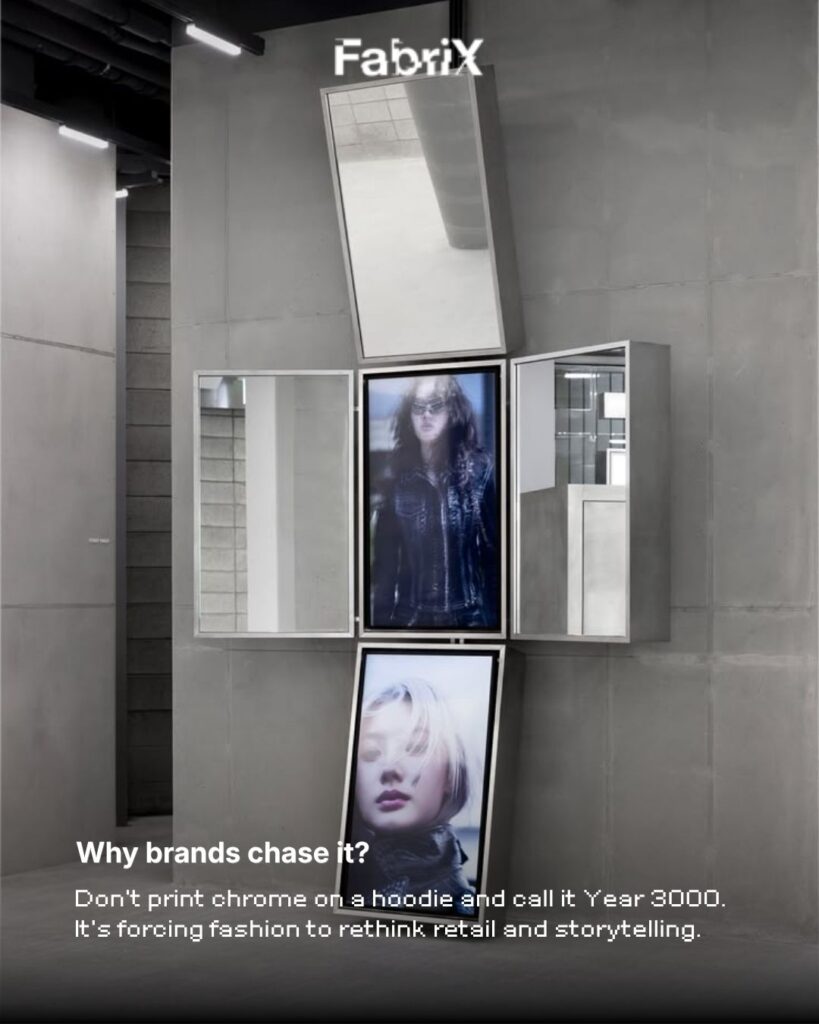
The Y3K brand playbook is very practical. The public outline points luxury houses toward three moves: future-minded storytelling, collaborating with Asian brands, and designing immersive experiences. In other words, do not just print chrome on a hoodie. Build a world people can walk into.
Y2K sells memory. Y3K sells possibilities.
That is why fashion tech brands care more about the second one. You cannot virtual-try-on your way into a butterfly clip. You can use digital twins, AR, and immersive retail to make a Year 3000 silhouette feel real on a real body.
Why Brands Are Chasing It?
Three commercial reasons, none of them mysterious:
1. Gen Z already speaks this visual language.
If your customer grew up on Aespa concepts, gaming skins, and Xiaohongshu cyber makeup, Y3K does not feel costume. It feels current.
2. It gives luxury a future story without abandoning craft.
Quiet luxury told people to whisper. Y3K lets a house talk about material innovation, light, structure, and world-building — the same things ateliers already know how to do — in a vocabulary younger audiences actually share.
3. It needs experience, not just e-commerce photography.
Chrome, iridescence, and structural volume die in flat product shots. They come alive in motion, on a body, in a room. That is why Jing Daily flags immersive retail, and why fashion tech — AR try-on, 3D garments, spatial presentation — is not a side dish here. It is the serving plate.
The FabriX Odyssey: Shaping Fashion’s Future
FabriX exists to investigate exactly this kind of shift: when a street aesthetic becomes industry infrastructure.
Y3K is useful to us for a specific reason. It proves that the next fashion conversation is not “digital versus physical.” It is how emerging designers from Asia translate a future they already live in — online, on stage, on Rednote — into garments and experiences the global market can wear.
That is Windowsen’s story. It is also the FabriX brief: curated emerging designers, fashion-tech tools that let people try the future before they buy it, and a community built on taste rather than whatever the algorithm surfaces next.
We will keep watching who does the second thing.
Read more:
• What is Y3K fashion — and why are brands chasing it?
• Y3K Fashion: What Is Y3K Aesthetic? Outfit Ideas & Style Guide
Stay connected with FabriX on social media for exclusive updates and content.